The Welfare State after COVID

I have a theory. Most of us, whether we think of ourselves as left or right wing, are in favour of a welfare state.
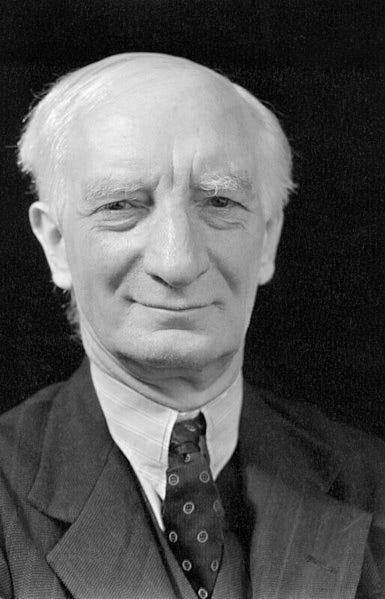
Just to be clear, I’m not talking about the welfare state we have in the UK today. I’m referring to the post-war idea of the welfare state envisaged by its architects. A role for the state in providing us with a degree of social security, as envisaged by William Beveridge. In its narrowest sense, the creation of a ‘safety net’ for those made ‘idle’ by circumstances beyond their control.
In other words, a set of statutory arrangements for those temporarily out of work for reasons of unemployment or sickness. There aren’t many of us that would find such a thing unreasonable.
However, post-COVID much has changed. The colossal amounts spent on keeping people in enforced idleness - particularly the furlough scheme built by our current prime minister - has transformed the relationship between state and society. The old problems of a dependent ‘underclass’, of worklessness, low pay and post-industrial decline, have been exacerbated by a disastrously wrong headed policy response to a virus.
Staying at home is no longer frowned upon as the preserve of the workshy. It became the responsible thing to do during the pandemic. And now, withdrawing into your personal space (while, admittedly, opening it up to your employer) has practically become a lifestyle choice for the lucky few. Meanwhile the poorest, and even those on average incomes, have been hit hard by the closing down of the world economy, and by the impact of the war in Ukraine.
As energy costs and living costs have increased, so have the handouts. This Tory government, far from calling out the ‘scroungers’ living off the hard earned work of others (as it might have done in the 1980s) is instead boasting about the huge amounts of tax-payers money it is pouring into other people’s bank accounts.
We are told by the Department for Work and Pensions that ‘millions will receive new cost of living support’ this year. Much as they did last year. There will be £900 Cost of Living Payments going to those on means-tested benefits; as well as extra support for pensioners (£300) and the disabled (£150).
This is not in itself objectionable. People are hard up. They need the money. But where is the frank discussion about what brought us here? Both Chancellor of the Exchequer, Jeremy Hunt and Work and Pensions Secretary, Mel Stride, point to ‘the global consequences of Putin’s illegal war and the aftershocks of the pandemic’. As have I. But it’s not the whole story.
I’ve already made the distinction between the policy of lockdown - which we didn’t have to do - and the virus itself. There were alternatives but they were ignored and their advocates cast out (sometimes literally) of polite society. There was, and is, no debate. The decades of pursuing energy policies high on green rhetoric (in more ways than one) has left us badly exposed, such has been the long-standing indifference to meeting the UK’s energy needs in the most efficient and cost-effective way.
And this, it seems to me, is a big part of the problem. Hunt is also keen to point to inflation-busting increases to working-age benefits, and the introduction of the Energy Price Guarantee ‘insulating millions from even higher global gas prices’. Again, these are not necessarily bad things in these difficult times.
People shouldn’t be punished for being poor or for the misadventures of policy-makers. But equally, we are paying the price for studied indifference to bad decisions and the bottom line. Of the need to pay our way, and to pay for the choices we (and our politicians) make.
The welfare state, for all its dysfunctions, was a significant achievement. Today’s political class - despite their apparent largess - have no vision for transforming state and society, addressing our needs or appealing to our ambitions. As one outgoing touchy-feely technocrat recently explained, it ‘no longer has enough in the tank’.