

I’ve been putting this off. The getting rid of the kids’ books. The ones they’ve outgrown. The thing is I’m rather fond of a few of them. The books (and the kids). And I really don’t want to dispose of them. Actually, come to think of it, I’m the only one who feels this way. I suppose I missed them the first time around. I didn’t enjoy reading as a kid. The classics passed me by. The Roald Dahls and the Enid Blytons. I think I managed a few of the Mister Men. And there were the Janet and Johns at school.
So it is perhaps not just that I am reluctant to part with a few of them - most aren’t all that - it’s that I’m conscious that I’m running out of excuses to do just that. Why keep the little kiddies books when they’re not little kiddies anymore. They’re far from all grown up and the teenage years are yet to hit, but it feels like my last chance to really grasp what it is about these books that still - as an adult - makes me so reluctant to let them go. So, which books? The ones that sit beside me are Dick Whittington, The Tiger Who Came to Tea, and Macavity. There’s another which I’ve held on to because I can’t quite believe it exits. It’s the anti good children’s book.
It is the tallest of tales. And quite unseasonal. Grandpa Christmas is written by Michael Morpurgo, widely regarded as one of our greatest living children’s authors, a former Children’s Laureate and perhaps most famously the author of War Horse, that was so popularly adapted for the stage. It takes the form of a letter written by a grandfather to his granddaughter. It starts off nice enough, recounting happy times in the garden together enjoying the wonders of nature. Half way through, though, it gets dark. Quite literally. A picture of the blue-green Earth is set against a dark sky and grandpa says:
But one day, if we do not care for her, this good earth of ours will be as arid and lifeless as the moon.
Really Mr Morpurgo? One: are you really sure about that? Not even the Climate Change Committee, stuffed as it is with Net Zero ‘burning planet’ zealots is saying that. Two: are you sure it’s the sort of thing we should be saying to the next generation? Especially if it’s more invention than fact. Do we really want the next generation to be consumed by this unfounded gloomy outlook on a future they are yet to make?
The life of this world is as fragile as you are ….
And so it continues with this not only tiny, lonely planet that Mr Morpurgo insists we are destroying. We too are pathetic creatures, all of us as ‘fragile’ as the next. Worse, it turns out grandpa (or rather Mr Morpurgo) has gone full on Gaia: ‘earth is a living, breathing being’ he says wrongly, ‘and we must hurt her no more’. Okay, I know it’s supposed to be fiction. But this is fiction on top of another fiction and it’s really not the sort of thing we should be inflicting on the young and impressionable.
I wish for you a world where, in flying our planes, driving our cars, heating our homes … we do not overheat the planet, do not melt the ice caps, raise the oceans, and so bring famine and flood and fire down upon ourselves.
Keep it light! It might as well have been written by the Secretary of State for Energy and Climate Change, Ed Milliband. I’m surprised it’s not required reading in schools. Not becuase it’s good - as you might have guessed from the above, it really isn’t - but because it’s propaganda for a society that no longer believes in itself, that sees its citizens as polluters and destroyers of all that is good in the world. It’s a childish notion that can only pollute our children’s imaginations. Why not fill their minds with possiblities about how we might harness our most advanced technologies to create the energy we need, and in that way make the world a better place?
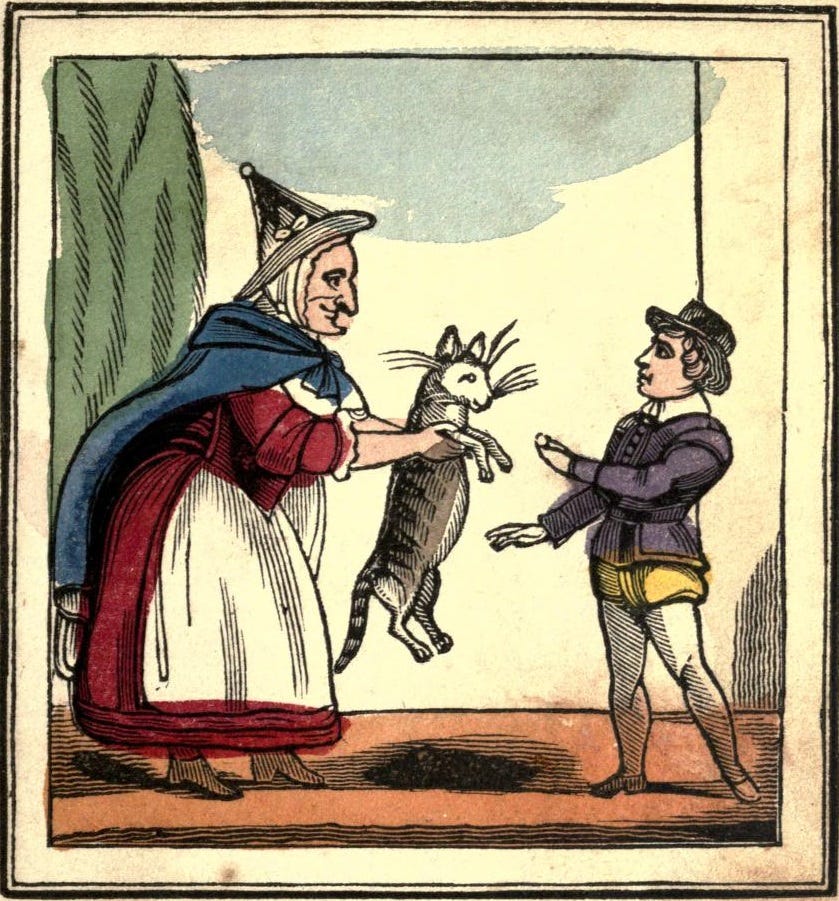
I was going to drop the books off at my kids’ old nursery but I think this one needs to go in the rubbish bin. Well, in the recycling. That would be rather fitting don’t you think? So what about those other books? What do they have that Mr Morpurgo, in this instance at least, so clearly doesn’t? A certain brutality. In the version of Dick Whittington I have - one of the Ladybird Tales - we learn by the second sentence on the first page about poor Dick’s circumstances:
His mother and father were dead and he had no one to care for him.
Kids can deal with this kind of thing. The death of a person - even a parent - makes a horrible sense. A dying planet is devastating in a much bigger way. It means there is no hope. It’s not a sad fact of life that we all must face. It is literally hopeless. By the second page of Whittington we have some optimism: ‘When the village people talked of London’ we hear ‘they spoke of it as a wonderful place’. And indeed it is. Yes, it has it’s issues - big ones - but it is still a place of wonder for kids. Okay, the streets aren’t actually paved with gold but it’s still a place of hope.
The Tiger Who Came To Tea is wonderfully surreal. That’s the word that comes to mind just looking at the wonderful illustrations that the book’s author, Judith Kerr, also drew. It’s also charmingly old fashioned. Everything happens - the tiger of the title arriving at the family home for tea and then, eventually, leaving - before dad arrives home from work. It’s an old world of stable roles and happy familial routine. So much so, the arrival of a tiger is accommodated without too much fuss.
Then he said “Thank you for my nice tea. I think I’d better go now.” And he went.
There is joy of a different kind in T.S. Eliot’s (yes, the poet) Macavity: The Mystery Cat. Originally a poem in his Old Possum’s Book of Practical Cats, the version I (sorry, my daughter) have is an illustrated 75th Anniversary Edition. The language draws you in, without you quite knowing what it is all about or why. The nonsense of it, the rhyme of it is infectious and stands for a love of language if nothing else. There’s something captivatingly elusive about this cat:
Mcavity’s a Mystery Cat:
he’s called the Hidden Paw -
For he’s the master criminal
who can defy the Law.
He’s the bafflement of Scotland Yard, the Flying
Squad’s despair:
For when they reach the
scene of crime - Macavity’s
not there!
There’s a lot of talk of trans these days - even in schools; but very little in the way of transgression. That’s what’s missing. The kids love it. And so do I.
Image: Unknown

There's another reason for holding on to old children's books – more recent editions of many old favourites have apparently undergone a form of 'literary cleansing'.