

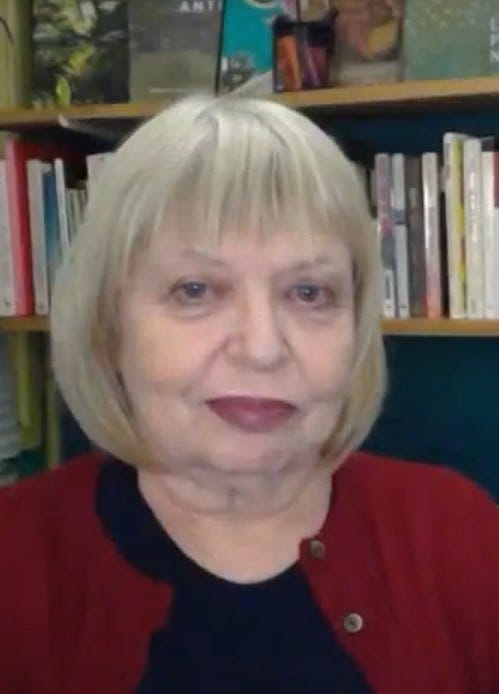
In her introduction to the book, Neurodiversity: The birth of an idea (2016) - which includes her original 1999 thesis, Odd People In: The Birth of Community Amongst People on the Autism Spectrum - Judy Singer admits she was putting a ‘positive spin’ on high-functioning autism. Often credited with introducing the idea of ‘neurodiversity’, reading this work of a genuinely insightful (and very influential) undergraduate is a reminder to those of us who criticise the movement with which she is associated, that Singer was only ever talking about ‘Aspies’. Especially when we complain, as I often do, that activists who insist that we celebrate our kids being ‘different’ forget about the real difficulties they face.
Singer explains how Asperger’s was popularised in the 1980s by Lorna Wing, giving a clinical endorsement to the idea that even the more able could be autistic. There was also something else going on. The ‘limited social, networking and organisational skills’ and an ‘aversion to direct human contact’ was mitigated with the arrival of the internet. By the early 1990s, online communities were beginning to emerge. This was the beginning of the formulation of a new collective identity, or set of identities. It wasn’t just the Aspies. It was the nerds and the geeks - their so-called ‘cousins’ - too. There is something I like about Singer’s idealism for what was this newly imagined community.
From the late 1960s, there had been a pushback by parents of Autists against the prevailing medical and therapeutic models, and clinical recognition was sought for those with Aspergers. Theories of childhood trauma, abuse and ‘cold’ parenting were challenged. Three decades later, they were speaking for themselves. The claim that it was the NTs (neurotypicals), not them, who were lacking was an interesting challenge and a testament to their new found confidence. It is the rest of us that are socially conformist, technophobic, and lacking in sensory awareness, they insisted. The neurodiverse minority nevertheless occupied an uneasy space. They were neither normal nor disabled. Turning so-called neurodiversity into a disability, said Singer, ‘fails to encapsulate the situation of people on the spectrum’, especially the more able. They were, to use a phrase we still hear today, ‘wired differently’.
As she explains, ‘the autistic spectrum has fuzzy boundaries’. It includes those who ‘lack an innate capacity for social communications’ and who have become what she describes as the ‘neurological Other’. She situates this seeking out of a ‘neurological kinship’, and where there is a notion of people having different ‘cognitive styles’ or ‘kinds of minds’; in a society that has become more individuated and fragmented. An insight that is too often neglected. The ‘oddballs’ at one end and the Autists at the other exist on a continuum, said Singer; but, today, we are all on a continuum, we all are just different.
Singer’s academic influences and interests were in the ‘construction of normalcy’, a Foucauldian critique of the systematising, ordering, categorising trends associated with the both the development of capitalism and the theoretical frameworks devised by its structuralist critics. But she is a lot more sensible than one might imagine given that background. She is critical of the ‘anti-biological stance’ of those who deny the existence of bodily dysfunction or the value of medicine in explaining or treating these conditions; and explains that ‘social constructionist ideas have already infiltrated the mainstream’. She also refuses to indulge what we might call ‘woke’:
Identity politics excels at gathering the data of oppression and victimisation, but can become mired in simplistic binary oppositions between oppressors and oppressed.
But she’s not blameless in her contribution to the creation of this damaging intellectual legacy. In that original thesis she adopts a language more familiar from proponents of gender ideology today:
I find myself using the pronoun ‘“they/we” to express the indeterminacy of my position “somewhere on a spectrum”
She wanted nothing less than a ‘neurodiversity revolution’, a society in which a ‘new type of human’ is possible. We were in the ‘birth throes of a new category of human difference’ she said. Like I say, there was something genuinely intriguing about these ideas back then. Indeed, whereas Singer saw ‘computers as the essential prosthetic device for autistics’ - what a phrase! - the mood today is rather more downbeat. We worry about young misfits stuck in their bedrooms, prey to ‘influencers’. We certainly don’t celebrate them. By contrast, in the 90s’ the World Wide Web, on which this new tribe depended, was exciting and full of possibility. For those who struggled with real world interactions (whether through psychiatric or cultural affliction), ‘email lists are their first experience of community’.
But there was always something dark about this too, about this new kind of community - if that’s what we can call it. Back then, these were outsiders. They were odd. But today, we’re all living these strange ‘hybrid’ lives. Do we really belong to communities at all - in the traditional in-person sense? Singer asks if we are all somewhat ‘culturally Autistic’? She captures the beginning of that blurring of what we mean by autism - her community of ‘ACs’ (autistics and cousins) would expand further still as the decades rolled on. This has proved a major problem for society as a whole, as we’ve seen more recently as diagnoses have exploded.
1 in 4 of us, we are told, is disabled. While she has a lot of time for the social model of disability - that we are, effectively, disabled by our environments - Singer doesn’t take this to its absurdist conclusion. She argues for a ‘new synthesis of biological determinism and social constructionism’. I’m not sure that quite works - as I wouldn’t, necessarily, subscribe to either of them - but she is right that science may have something to say about the underlying physical causes of autism (albeit limited so far), while not discounting the fundamentally social character of the ‘neurodiverse’ experience.
Singer, a more complex thinker than she is perhaps given credit for, asks in her thesis arguably the most important, and still unanswered, question of all:
But what exactly is this phenomenon, why has it constellated in this particular era, and what cultural significance does it have?
I wish some of those hysterically trying to cancel or discredit Channel 4’s The Great ADHD Myth, were more willing to ask this question. Why are ADHD and ASD rates climbing as they are? Why does every other child seem to have a special need? Why is every university and workplace inundated with requests for mitigations and reasonable adjustments? That documentary - good as it was - failed to ask this more searching question about why we’re getting ourselves in such a mess over ‘neurodiversity’ and why now. As much as it challenged the ADHD orthodoxy - at last! - it didn’t get to grips with the underlying cultural and social factors.
But even going there has created a storm. So identified with and invested in the idea of neurodiversity are Singer’s ideological offspring. Which is why, in the end, her claim that neurodiversity was either the last great social movement of the last century, or the first of this one, now feels different. It hasn’t run its course yet but the possibility of a course correction has been opened. ‘It was neuroscience that legitimated us’, says Singer, reflecting back on the movement’s relationship with the neuro-establishment (as opposed to the by then out-of-favour psychiatric movement). But, I wonder, given all the pseudoscientific claims about ‘ADHD brains’ and different nervous systems (sic), whether this is a problem? Ditching the old therapeutic tropes that blamed parents and their upbringing, in favour of a new science that we are only now really starting to pick holes in, is perhaps not the advance she imagined it to be?
But, the problems that have accumulated over the decades shouldn’t distract us from her contribution to an ongoing debate. It is not just the ‘profoundly’ Autistic, or those with co-occurring learning disabilities, who suffer. For that we should be thankful to figures like Asperger, Wing and Singer too. Her advocacy for a new collective through which those on the margins might seek support and understanding and, yes, a sense of identity, was a positive step. But as the ‘cousins’ - along with the aunties, uncles, and second cousins - have taken over, neurodiversity has become the victim of its own contradictions. The welfare, SEND and health system hasn’t quite collapsed underneath their weight quite yet, but there’s only so much help and support to go around.
Singer, unlike those that follow her today, argued for more debate and ‘disputation’. Unfortunately - as we have recently seen - the movement of which she was such an important part tends to cohere around a far less tolerant and intellectually curious outlook today. Activists and advocates for the neurodiverse take any disputation of their closely held beliefs personally. They identify with their label, diagnosed or not, and regard any questioning of their identity as an attack on their person. This is understandable, and (as one of them) I sometimes feel it too. A good deal of relief and comfort can come from finally having one’s struggles in life recognised, excused or explained. To have that questioned or disbelieved can be deeply unsettling, but we need to have an open, frank and productive dialogue if we are to better understand how we are to live with ourselves and each other.
Image: AXSChat
I broadly agree, although I think one underlying problem is the term “neurodiversity” itself. It groups autism, ADHD, Tourette’s, bipolar disorder and a collection of largely unrelated conditions beneath one increasingly capacious umbrella. It is rather like the demographic category “18 to 34”. An 18-year-old woman and a 34-year-old man may be convenient inhabitants of the same spreadsheet, but that does not mean they have much else in common.
“Neurodiversity” may be useful as a political coalition or a general argument for tolerance. It is far less useful clinically. It tells us almost nothing about a person’s particular condition, impairment or support needs.
The diagnostic threshold also needs tightening significantly. Existing criteria supposedly require symptoms to have been present since childhood, to occur across different areas of life and to cause substantial functional impairment. Yet ordinary distractibility, procrastination, boredom and disorganisation are increasingly treated as sufficient evidence of ADHD.
Curiously, it is nearly always ADHD. I rarely encounter people casually announcing that they have self-diagnosed autism, but I am increasingly told by apparently ordinary, functional people that they “have ADHD” because they lose their keys, dislike boring work or struggle to concentrate while carrying a permanently connected distraction machine in their pocket.
Self-recognition can be a legitimate beginning. Many people, including me, were diagnosed late because something genuine had been missed. But self-recognition cannot also be the conclusion. The conditions have not become lifestyle choices, but adopting the labels sometimes has.
The NHS is then placed in an impossible position. It cannot simply dismiss people requesting an assessment, because some will genuinely need a diagnosis and support. Yet demand is overwhelming a system without the capacity or effective mechanisms to distinguish probable clinical need from much looser self-identification.
[Today’s Guardian report](https://www.theguardian.com/society/2026/aug/28/adhd-autism-costs-england-running-out-of-control-nhs-alliance) describes spending increasing tenfold in some areas, adult ADHD expenditure rising from £11 million to a projected £51 million, and individual areas receiving invoices from dozens of providers charging between £300 and £3,000 for ostensibly similar services. Whatever proportion of applicants ultimately receive a diagnosis, the machinery created to process this demand is becoming financially and clinically incoherent.
The final irony is that this harms people with serious neurodevelopmental disabilities. As someone with diagnosed autism and ADHD whose conditions have had substantial lifelong consequences, I am thoroughly tired of being told that “everyone has a bit of it”. As the language becomes ubiquitous, the public begins to conclude that everyone is claiming ADHD and that everyone claiming it is probably exaggerating.
A movement intended to legitimise neurological disability risks trivialising it. Once almost anyone can claim to be neurodivergent, the word ceases to distinguish those who are genuinely and seriously disabled from those experiencing the ordinary difficulties of being human in a distracting and increasingly dysfunctional world.
Yes, it’s politics not medicine. I and my colleague John Cromby were among the first to critique the ND phenomenon/ideology and our blog series has been widely read. Here is the first one, in case you haven’t come across it.
https://www.madintheuk.com/2024/12/part-1-neurodiversity-what-exactly-does-it-mean/