

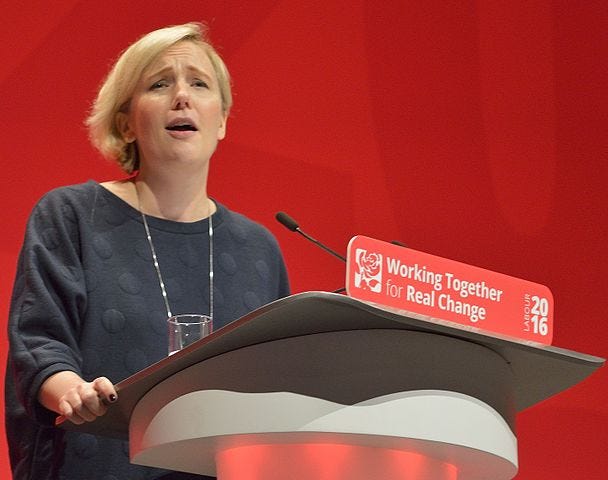
Thank you, Stella, for writing to me, and your other constituents with children with special educational needs and disabilities (SEND). I have, as you say, ‘been in touch with [your] office about special educational needs provision’. And many have, indeed, ‘struggled to navigate the support available for their children, often ending up in tribunals or combative battles with the local authority over resources’. You have kindly invited us to contribute to a ‘dossier’ for consideration by the new Education Secretary, Bridget Phillipson. You tell us she ‘has stated in her first week that addressing SEND provision in this country is a priority for her and she’s asking for input from MPs’. Like you, I welcome her interest in this failing area of policy which continues to impact on many children and families, and agree it is long overdue.
You have asked us to focus on the following questions:
1. What helps the child you care for to thrive?
2. What has hindered your child’s ability to thrive?
3. If there was one thing you think would make a difference to SEND provision it would be ….?
I’ll get to these, but first I have some wider thoughts and observations on where we are at the moment and how we got here.
Many children with SEND - approximately 12% of children in England - face challenges, as I’m sure you know. From everyday difficulties at school, to long waiting lists for assessments and therapeutic interventions. Add to this the challenges that, for instance, autistic children encounter - vulnerable to misdiagnosis with gender dysphoria or being arrested for being (to adapt a phrase) invisibly divergent - and you get a sense of why it is so important that the right services and support are in place. And that our children are treated as having equal worth to any other child, and with the potential to thrive and achieve.
It’s ten years since Children and Families Act 2014 (supplemented by the SEND code of practice and The Special Educational Needs and Disability Regulations). It brought into existence much of the SEND system we are living with now. The government also issued new guidance to parents, in which it acknowledged families up until that point had to fight for the support their children needed. It was rightly argued that this must change. That parents are the most important people in their children’s lives, that we know our children best; and that we should be listened to and ‘fully involved’ in any decisions that affect them. Well, ten years on, we’re still fighting.
The SEND and Alternative Provision Improvement Plan was published over a year ago. The plan promised investment in training, apprenticeships and specialist workers, and thousands more specialist school places. £2.6 billion was to be spent between 2022-2025 on special and alternative provision, including 33 new special free schools in addition to the 49 already planned. New standards to help families know what they can expect; and new guides for professionals e.g., supporting children in mainstream settings, were being produced. There was a promise to cut the bureaucracy associated with assessing children with more complex needs. The inspection regime would be beefed up and funding increased to more than £10 billion last year.
I’d be interested to know whether any of this happened and whether your government will build on it or do anything differently? The party politics don’t matter to parents. We just want to see things improve for our children. We badly need reform and investment to get the SEND system working properly. I speak, by the way, as one of those middle class parents we used to complain about when I worked in children’s social care. But we’re not all middle class. Some really struggle on their own, forced to live off benefits because their kids can’t cope with school, and starved of support.
Both autism and ADHD are on the rise - with 1.2 and 2.2 million people, respectively, currently diagnosed with these conditions in England. Autism is associated with poor outcomes e.g., much higher rates of school exclusions. As Jessica Morris at Nuffield Trust explains - there has been a ‘five-fold increase in the number of open suspected autism referrals since 2019’. The waiting list for assessments has been growing and wait times are getting longer, with an average of 9 months just to be seen. In some parts of the country it can take years just for the first appointment. Things are similar with ADHD. The number of patients being prescribed with medication increased by half between 2019/20 and 2022/23. The biggest increase is not amongst children but adults aged 25-44. There was a 146% increase in prescriptions for 30-34 year olds.
There are different views on why this is happening. Morris points to greater ‘awareness’ of so-called neurodivergent conditions and how some were ‘unmasked amid lockdowns’ during the pandemic. It is no doubt true that we know much more about these conditions, and the way we responded to Covid-19 contributed to the distress many felt as a consequence of those difficult times. But how aware are we really? As Morris says, even the experts aren’t sure what is really going on. Is there an increase in incidence, are more of us just more inclined to seek an assessment nowadays, or is there over-diagnosis? We do know, she says, that there are ‘wider assessment boundaries’ and the rate of diagnoses across the UK are inconsistent; which perhaps suggests a lowering of the bar and uneven assessments.
While there is uncertainty about the causes, we know the impact these trends are having. Funding is totally inadequate, schools are struggling, there aren’t enough teachers or teaching assistants to cope with the level of need in the classroom. And there is a shortage of specialists, such as educational psychologists and speech and language therapists, to support and advise them. All of which means that those who badly need it are being denied vital support. There does, though, seem to be some recognition of the strains being placed on the system. There is now, for instance, a taskforce looking at the ADHD crisis in England. As Morris argues, we still need to have a ‘debate about the role of the NHS in the assessment, diagnosis and treatment of neurodivergent conditions’; and to think how different services including education can work together to respond to the rapid escalation of need in this area.
SEND is a broad category that I, as a parent and a school governor, am increasingly uncomfortable with. For background on how these needs are identified and responded to, important research was commissioned by the Department of Education into how schools address SEND support. Some school leaders and teachers explained:
… incorrect identification of SEN is a challenge within their school, and differentiating between a SEN and a behavioural need, a developmental need, and a language need (e.g., ESOL pupils) can be very challenging and may result in the misidentification of SEN.
An important observation. We often hear how not enough children with special educational needs are identified early enough. This is undoubtedly true and many parents will recognise it as such. But could it be that far too many are identified too early or too hastily? Not only are there concerns about the identification of needs. The feedback from those who took part in the research indicates that for all the dedication of staff working with these children, there is little to suggest their interventions have any measurable impact. Nor is their much indication that parents, identified as the most important people in SEND children’s lives in that 10-year-old guidance, are any more involved now than they were back then.
The report notes how ‘challenging’ it is for teachers with large classes to teach in an inclusive way. The concept of inclusion in schools (as elsewhere) is being put to the test and - while it works for some - when it doesn’t things can go very badly wrong. We should be thinking again about the schools we have, and whether they are a good fit for the children who need some kind of ‘special’ provision. Wherever or however that may be. The researchers describe respondents being of the view ‘that what was good for pupils with SEN was considered good for all’. But is this true. I have my doubts. It’s certainly counter-intuitive. If children’s needs are real and different to their peers, then two things follow from that. First, they need to be taken seriously. Second, there is at least the potential for compromising the education of their peers.
Nevertheless, while all children with SEND need some support additional to that of their peers, only a minority require anything more intensive or complex than that. And a far smaller group still are, or have been, held in what Baroness Hollins insists on describing in her upsetting report as solitary confinement. She describes the shocking treatment of people with autism and learning difficulties, held in segregation or seclusion in supposedly therapeutic settings, in some instances for many years. ‘We cannot legislate our way out of these difficulties’ she says, ‘without more resources in the wider health and care system as well as in focused and local specialist support’.
Absolutely. But, beyond this highest level of need, we must also try to understand what it is about our society, that is creating the demand for diagnoses and expanding special educational needs in the first place. As the DfE commissioned researchers note in their report, school leaders:
… rarely talked about ‘success’ in relation to SEN support in terms of pupils no longer needing support.
Are the architects of the SEND system guilty of creating a category of need that they are unable to meet? Why are so many young people struggling at school? Why are so many being diagnosed with mental health problems? Is there, likewise, a sense in which society has been overtaken by an ideology of victimhood and psychological harm, what sociologists describe as an embracing of the ‘sick role’? Why are so many adults on ADHD medication? Without wanting to call into doubt the experience of those caught up in this wave of referrals and diagnoses - and without wanting to be seen to be pulling up the drawbridge - we surely can’t go on like this?
Those who need medical or therapeutic interventions or ongoing support must get it, of course. That we are currently failing to do that is causing great distress, and no little harm, for these children and their families; and disruption to the education of their peers too. But we also have to find a better way, as a society, of addressing the cultural maladies that I suspect (notwithstanding expert disagreements) lie behind those dramatic figures.
For a government apparently keen not to loosen the purse strings too much, it is only prudent to ask whether you can afford not to be ambitious and do something about this. By misattributing the underlying problems some children and adults face; by calling growing numbers of people neurodivergent, whether or not they have a diagnosis; by saying more and more children possess ‘special’ needs when what they are going through is increasingly commonplace - are we only creating more and bigger problems for ourselves?
Back to those questions, which I’ve yet to answer directly. I think you might be able to tell from what I’ve already said that I don’t think there are any easy answers. We have, it seems to me, two or maybe three broad problems.
The first is a fragmented and faulty SEND system - including local authority SEND teams, transports services, and various health services, etc working at cross-purposes. Instead of being centred around the family or child, and minimising the duplication and confusion of multiple agencies - they can be preoccupied with the maintenance of their own processes, and the gate-keeping of access to support and services. There is very little expert input beyond the initial assessment of need for most of these children, and beyond that provision is sparse and subject to constant lobbying and legal wrangling for those parents who feel able. The system is broke, and it is broken.
The second problem is the most immediate - the already mentioned lack of resources. Both funding for schools and local health and care services. And the huge gap in the workforce, from the heroic teachers and underpaid teaching assistants, to the rarely spotted specialists advising them. Schools can’t cope with the increasing number of children with social, emotional and mental health problems, or who exhibit behavioural difficulties. For all the worthy talk of ‘awareness’, that everyone from football coaches to office workers have claimed to have following a half day course, there is a real mismatch with the reality of what these children are actually experiencing.
This breeds cynicism. In the franker conversations I have with friends and even teachers, they tell me how the kids with SEND in their class are dangerous and disruptive. They’re excluded because they’re badly behaved or they just should’t be there. They blame the parents of the anxious kids who won’t attend school - made worse by lockdown (which you, incidentally, enthusiastically supported in opposition). I could say, as the parent of a child with SEN, that this is a shocking attitude. It shouldn’t be allowed, I am offended, etc. But the truth is, I think they have a point. For every child with a genuine special educational need or diagnosed disability, how many children and families are actually dealing with another set of problems of a wholly different character?
Which brings me to the third, and biggest, problem. The expansion of the numbers of children labelled as SEND and a broader identification of people (adults included) with various conditions, didn’t just happen. It didn’t appear from nowhere. People understand themselves and their children differently now than they would have a generation or two ago. We are much more likely to regard ourselves as suffering with (or, more likely, ‘identifying with’) certain conditions or problems. This is bad enough but to encourage our children to see themselves as emotionally damaged or in need of therapeutic support too? That is irresponsible. And, not surprisingly, it has swelled the numbers of children and adults alike approaching services.
So, finally, to answer your questions. What helps SEND kids thrive? In my experience, it’s schools, teachers and teaching assistants, and the backing of other professionals and advisers when we’re battling for what our kids need. When they get it right, things are much easier. Even if everything breaks down and doesn’t work out - if you’re not also having to fight the school, that is a big plus. Sadly, it can also be schools that stand in the way of children thriving. They can be unsympathetic, unknowledgeable and sometimes downright cruel. It can take a long time to find the right one. Sometimes you don’t.
What stops them thriving? As I’ve already said, and in danger of sounding like a juvenile left winger - it’s the system. The way local authorities seem intent on making life as difficult as possible for parents. Whether it’s just trying to get the assessments or the services their children so obviously need. The way schools feel obliged to exclude children for having meltdowns, for instance - despite all the talk about ‘protected characteristics’ in the Equality Act. Or the way it puts the ideology of inclusion ahead of putting in place the right provision to meet children’s needs. That’s not schools’ fault. Many are doing their best. Sometimes it’s bad practice and lacking organisation in local authorities. But it’s bigger than that. It’s central government too.
The one thing that would make a difference to SEND provision, though, is changing our culture. Not just at the organisational level but society-wide. To be fair, I don’t think your government can solve it. At least not on your own. But you can lead the way. And make a start by asking more questions about how children’s needs are assessed; and by promoting a culture in the UK that is more robust and resilient. That doesn’t promote the idea (especially to children) that every difficulty or barrier we encounter must be given a label or somehow treated. We need to tell our young people that they are resourceful, and - for the most part - able to cope with the hardships that life will throw at them. That is the only way you’ll put a break on the relentless demand on services, and improve the offer to the relatively few who actually need it.
Image: Rwendland