

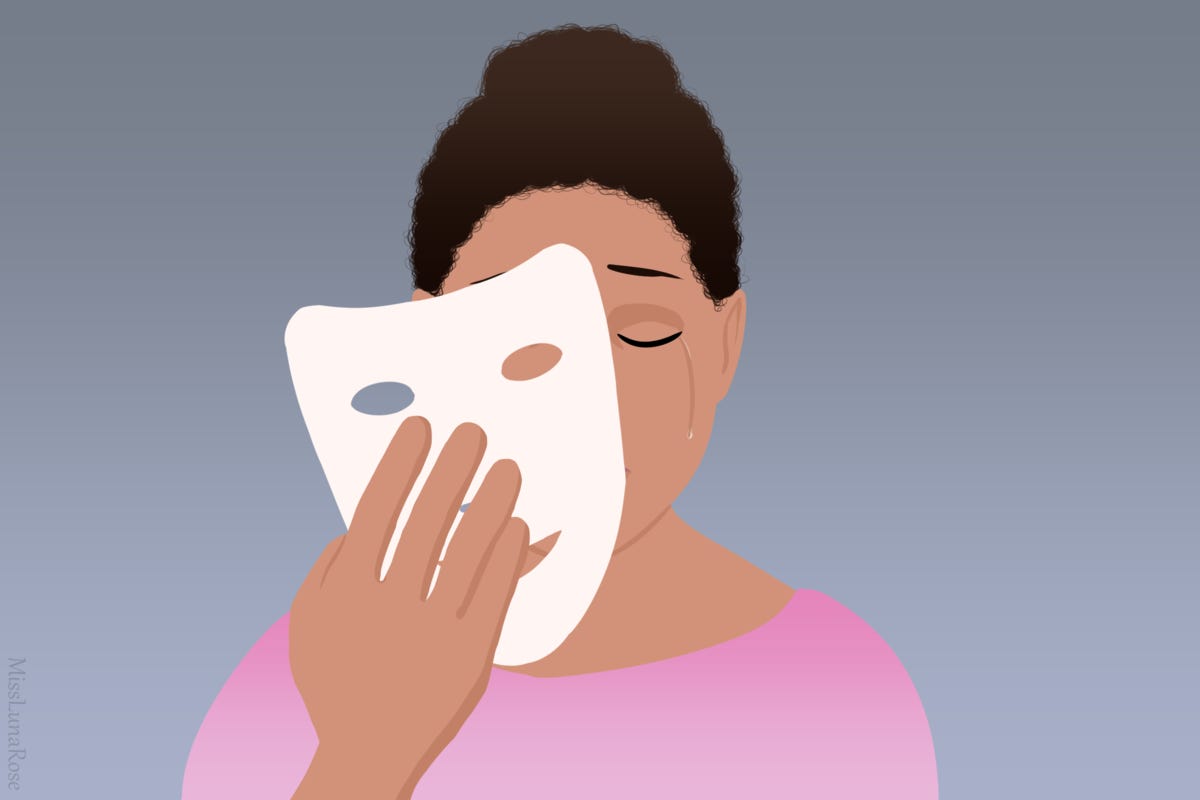
We’re nearing the end of World Autism Acceptance Week (27 March to 2 April). At the end of which it will be World Autism Awareness Day. Sorry, you’ve already missed Neurodiversity Celebration Week (13 to 19 March). So much ‘awareness’. So little time.
A celebrity, Ireland International footaller James McClean, announced they are ‘on the spectrum’. And there was an engaging documentary - Unmasking My Autism - featuring former model Christine McGuinness. Both of which, interestingly enough, were about parents being diagnosed after discovering their children were autistic.
This is a recurring theme - adults, particularly parents and especially celebrities, in search of a condition like Autism Spectrum Disorder (or, failing that, ADHD), on which to very publicly hang their sense of feeling different. As is the sense of recognition and relief for those who get the diagnosis they crave.
I say this not entirely cynically. There is a known genetic predisposition to ASD. And lots of parents, after initially resisting the idea that their child might have such a troubling condition, do find themselves hoping for the diagnosis that opens up the support (albeit inadequate) their child needs. I’ll come back to this in a moment, but what about McGuiness and her fascinating exploration of girls’ experience of autism?
Again, there is a recurring theme. Those who study or work with girls and young women point to the very different ways in which they typically present with autism. They tend to be much better at ‘masking’ their symptoms, or they get misdiagnosed with an eating disorder. Indeed they are so good at disguising what they are going through, that it was long thought that the syndrome only affected boys. Despite the stress and anxiety such a feat can cause them.
While, of course, it is a good thing that this behaviour has been identified, I can’t help feeling that it fits all too snugly with a no less healthy cultural orthodoxy. There is a readiness to problematise masking not just in the context of a distressing condition like autism. There is a wider receptiveness to the idea of rejecting restraints on our innermost natures. Behind the insight into how some autistic people learn to cope with the demands it places on them - and at some personal cost; there is also a notion that it’s bad to hide our feelings, our problems. That masking, in itself, is a bad thing.
I’m not so sure that’s the case. It seems to me that, in order to get on in life or even to just to survive the day-to-day, we sometimes (maybe always) need masks. Both to protect ourselves and to take on the differing roles that society requires of us. While those with autism struggle more than most - as the documentary made clear, they can exhaust themselves - with the stress of social situations; we are never entirely our ‘authentic’ selves. Rather we perform different versions of ourselves as the situation demands.
While ‘bottling it up’ isn’t necessarily a good idea, is letting it all hang out really any better? Isn’t there something to be said for keeping things inside, for tempering our instincts with a bit of control? It is beginning to feel almost as if this narrative is as much a culture war on reserve, resilience and restraint; as it is a discussion about the psychological dispositions of people with ASD or a social policy discussion about how to help or accommodate them.
Which prompts another question. Has the government’s five year Autism Strategy made any difference? To be fair, it’s hard to tell as we’re only a year in. But the things the strategy sought to address are still very much with us. From late diagnosis, long waits for diagnosis and a lack of support post-diagnosis (especially at school); to the ‘loneliness, anxiety and exclusion from public spaces’ worsened by the pandemic, and a shocking gap in average life expectancy - 16 years! - compared with the rest of the population.
For all the interest in the condition in recent times, and the sympathy for - and identification with - those who experience autism, this is not matched with the kind of practical support and the expertise people with the condition so desperately need and deserve.