

Neurodiversity Celebration Week is back. While I’m not about to get the party hats out, I do feel the need to be a little more positive this time around. So, I won’t bore you with how raising a child on the Autistic Spectrum is hard work, and how the condition itself and the fight to get some support is a struggle for parents. (Okay, I might do this a little bit). While they seriously overdo it, I willingly concede that celebrating difference as normal - as the celebrants of neurodiversity insist we must - is indeed a positive. People are naturally different and that’s a good thing. We should be tolerant of each others ways and peculiarities. I know I have mine. And I suspect you have yours.
I suppose the over-use of that word - diversity - tends to divest it of any meaning. It takes on a cultural political hue. It demands allies and shouts down doubters. But it is important to say that, beyond our common humanity, we are a varied bunch. And as irritating and even offensive as others might seem, we should try to get along and try to accommodate as best we can the baggage and the traits each of us bring. But in the context of neurodiversity, this quite reasonable position raises questions. If we are to accept these differences as part of being a normal human being, why do we need to label people at all? If we’re all neurodivergent, then who are the neurotypicals? More to the point, who’d want to be a boring neurotypical anyway?
And if there is this natural variety in cognitive functioning, as there surely is, then why are so many people being referred for assessments for neurodiverse conditions like Autism Spectrum Disorder? Those in the neurodiversity movement tend to be critical of any suggestion that any of their number should be described as ‘disordered’. And yet that is what the ‘D’ in ASD stands for. Presuming those diagnoses are reliable - and putting aside the fact that many people self-diagnose - those receiving those diagnoses must surely be understood as more than just different?
Like any other condition worthy of the attention of a medical professional, Autism actually has real world implications for the individual, necessitating some kind of treatment or support. There is a fuzziness about these conditions, not least when they are collected under the neurodiversity umbrella, there is no reliable genetic test; and there is a debate about the nature and even the existence of conditions like ADHD. But Autism is, nonetheless, long established as a real condition with serious consequences for those who live with it. Other kids might have a tendency to bite at nursery, or to struggle in class, or have tantrums when they don’t get their own way. But Autistic kids can do all this and more, and for quite different reasons.
They can get anxious and exhausted by the everyday. They might try to mask their Autism, or express their distress behaviourally through violent meltdowns - perhaps being restrained by teachers - or have shutdowns (where they essentially go mute for a prolonged period). Some, like my son, will be diagnosed with ADHD too or have a demand avoidant profile which makes their ability to engage with learning feel like an impossibility at times. None of us want to believe there is anything wrong with our children. There is what I’ve come to call the three Ds of denial, desperation and then (hopefully) diagnosis. At first, you don’t want to believe it. Then you become desperate - usually because of problems at school, maybe at home too. And then, you just want the diagnosis because it offers you a degree of clarity and hopefully some support too.
At least, that is my working assumption. Perhaps this is changing and more people feel the cultural pull of ‘identifying’ with being, or being the parents of, neurodiverse individuals. But I still think, for most parents, this isn’t a choice. It may feature prominently in the search for an explanation - but it would be perverse to wish a disorder or disability upon yourself or your child. Though as parents we might be conscious that there is a strong genetic component, most people don’t have a cognitive disorder. No matter how different we feel, only about 1 in 100 of us are Autistic.
So what is it like to be Autistic? There is a long list of traits, behaviours and difficulties associated with the disorder. But, to put it simply, there are two core characteristics. One, they find it hard to understand the social world and struggle to engage with or communicate with people. The other, they have restricted and repetitive behaviours. This can sometimes include sensory issues - perhaps eating the same ‘beige’ food every day, finding certain smells unbearable, not feeling the cold, or a need for weightiness - my son lives in his dressing gown.
In other words, Autistic people are more than just different. They face very real challenges that vary widely in number and intensity across the spectrum, and they experience significant social disadvantage. While schools may think of themselves as inclusive, kids with special educational needs are four times more likely than their peers to receive a fixed term exclusion. We might think we are more aware and tolerant as a society, but Autistic kids keep getting arrested essentially for doing and saying Autistic things. We think we are more accepting of difference and yet, as I say, we have a peculiar and worrying fondness for labelling ourselves and each other.
And yet, to think how these children must have been treated in the past is also to get a sense of how far we’ve come. As difficult and frustrating as it is now to negotiate the thoroughly inadequate provision available for these children, I dread to think how awfully they must have been treated before we began to understand what Autism is. While we flatter ourselves that we are ‘aware’ - because we went on a course or because we have a reasonable adjustments policy that recognises ‘invisible’ disabilities - the truth is that even us parents often just don’t get it. Still, on the whole, we are far better informed than we were.
And yet I also wonder whether in other ways we might have dealt with things better in the past? Is there something about the way we live our lives and frame our problems today, that simply wouldn’t have been an issue before? I can’t be the only one who wonders where all the neurodiverse kids were in my own childhood. Or why schools were extraordinarily tolerant of disruption in the classroom - not to mention the ‘fight! fight!’ in the playground. The sort of behaviour that would guarantee at least a phone call home or even an expulsion today. I wonder if there is a tendency to over-react or to escalate issues rather than ‘nipping them in the bud’ as they might have back in the 1970s and 80s when I was at school? Are we now labelling these kids instead?
Whatever the reasons, and they are no doubt multiple, the considerable resources and expertise on which the dysfunctional special educational needs system relies, can’t cope with the demand. The numbers of people with suspected Autism in England waiting for an assessment has risen from less than 20,000 to more than 200,000 since 2019. That’s a tenfold increase in suspected Autism in just 5 years. Since 2014, the number of EHCPs – or Education, Health and Care Plans, for special educational needs children with a higher level of need (including Autism) - has more than doubled. So, there is clearly something going on - whether its growing real need, the creation of new ‘needs’ or the re-categorising of old ones. I suspect all three are in there somewhere.
It is actually difficult to get a diagnosis as many parents waiting long months for an assessment when they need help now, will tell you. The Health Secretary has joined those who argue that there is a problem of ‘over-diagnosis’. Certainly, an increasing tendency to seek medical or therapeutic help would explain why parents with children suspected of having neurodiverse conditions are being further disadvantaged by a system overwhelmed by a demand for diagnoses. However, those who claim it’s just bad faith actors playing the system, are as wrong as those offended by any questioning of how so many people could possibly get sick, disordered or disabled so quickly.
We need a debate that allows both tolerance of people living with these troubling conditions and a tolerance of views with which we might disagree. Nobody has a monopoly on the truth. This is a complex and costly problem for us all. While it pertains to what should be a small minority of the population, it has grown - particularly since lockdown - to a point where it threatens to play a leading role in bankrupting the nation. From special educational needs and mental health to disability and sickness benefits, we are (I hope) at the beginning of a national conversation about what’s driving this ‘needs’ crisis.
But I want to end on a positive note, as Neurodiversity Celebration Week draws to a close. Like any parent, I want to celebrate my child for who they are and what they do, rather than just banging on about the problems they face. Because amid all the heartache and difficulty, and the frustration with failing services, there is hope – and it comes from us and from them rather than from experts and the state. While I know, first hand, how very different their capabilities and experiences can be - they are among both the most gifted and the most severely disabled - it is important that we appreciate them for who they are.
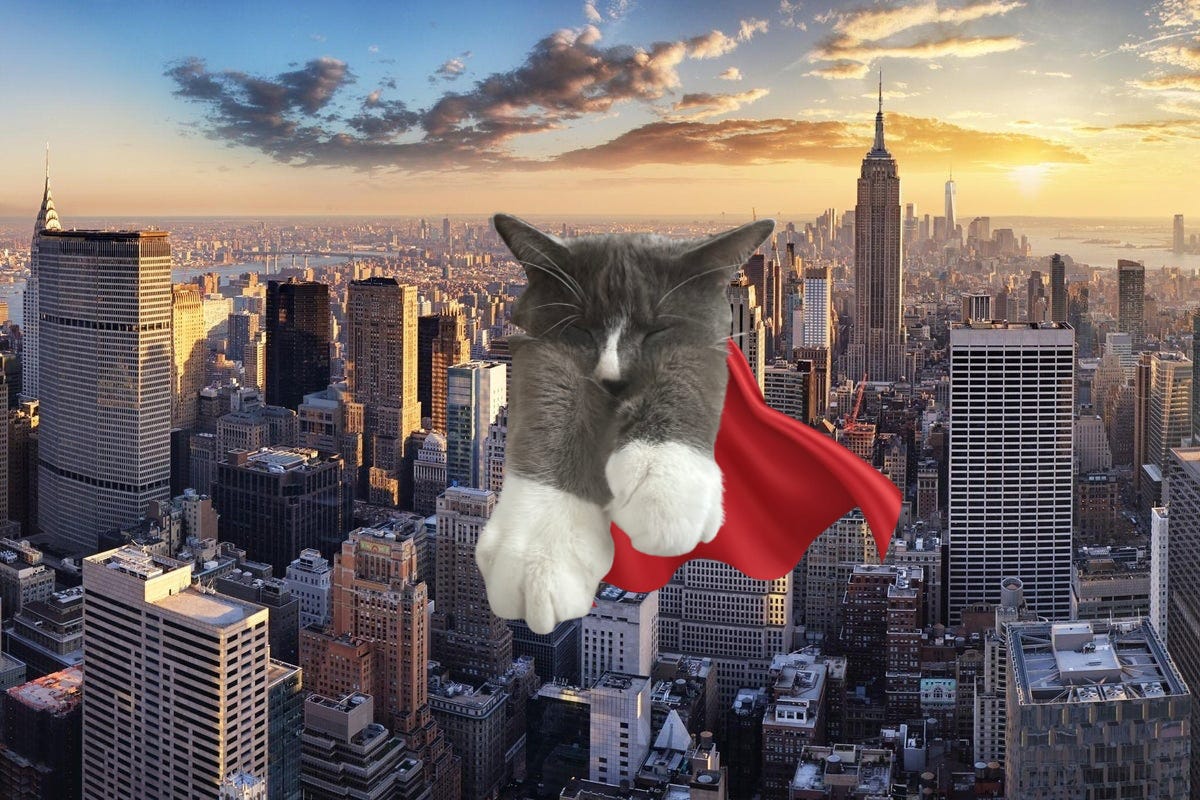
Their obsessive qualities and deep interests can also make for great expertise (my son’s IT skills are quite something). Some of them are, in career-speak, brimming with transferable skills. It’s all about how you capture what they can do and accommodate them and everything they bring with them. Autistic people are not, as is sometimes assumed, without empathy, totally helpless or devoid of emotion. My son is particularly fond of our cat (pictured), for instance. Indeed, that we all identify with aspects of Autism - be it social awkwardness, the lack of a filter, difficulty expressing emotions or forming relationships, or a nerdy interest in particular topics - should help us to understand it. I certainly think we could learn a few things from Autistic people themselves.
Perhaps we could all be a little more Autistic in our attitude to emotions. We don’t have to express them all the time. Yes, it’s good to talk but emotional incontinence is a problem too. While it’s a good thing that we don’t feel compelled to ‘bottle things up’, sometimes putting a cork in it is the best option. As damaging as ‘masking’ can be for Autistic people, they are doing intensively what we all do to a no doubt lesser extent: suppressing our inner selves to function in a world that isn’t built around us. We need to at least meet them half way. And if we’re going to loosen up and have that debate about spiralling neurodiverse needs - a bit of the bluntness and brutal frankness that the Autistic attachment to truth-telling entails, might come in handy too.
Image by Darragh (my son)